ADA Easily Accessible Portable Bathroom Rental: What Access Specifications Apply
@titusdpre347
September 26, 2026 · 16 min read
When a person requests an ada accessible mobile restroom, they are normally trying to fix an extremely practical problem. A festival coordinator requires enough devices for a weekend crowd. An institution is organizing an outside graduation. A community is setting up restrooms for a public event in a park. A service provider might be trying to understand whether the same policies apply on every website. In each situation, the concern sounds basic, yet the solution relies on greater than whether a bigger mobile unit is available.
The managing government requirement in the USA is the 2010 ADA Criteria for Accessible Design, as analyzed by the Division of Justice and the United State Accessibility Board. That point issues because people often rely on sales language, rental brochures, or neighborhood practice as opposed to the real accessibility structure. "ADA style" and "wheelchair friendly" are illegal criteria. The legal question is whether the mobile bathroom configuration satisfies the ADA demands that put on it.
For most public dealing with portable bathroom leasings, the big concerns are not simply the unit itself. They consist of how many obtainable systems are needed in a team, whether the system is effectively recognized, whether a person can really get to and enter it, and whether the interior design pleases the bathroom area needs that use under the ADA criteria. Those information are where several conformity issues begin.
The beginning point is the 2010 ADA Standards
If you rent mobile commodes for an event or a momentary website that offers the general public, the analysis needs to begin with the 2010 ADA Criteria for Accessible Style. Those requirements regulate access requirements under the ADA, and they are the standard that matters when individuals discuss ada compliant accessible mobile toilets or ada certified portable toilets.
That difference is worth slowing down for. An unit can be marketed as an ada mobile restroom due to the fact that it is bigger than a typical single device. It might also have grab bars and a bigger door. But the lawful criterion is not based upon marketing labels. The ADA asks whether the relevant scoping and technical requirements are met.
That suggests the discussion needs to consist of greater than square video or whether a mobility device can fit with the opening. It also has to cover the path to the unit, the access problems, and the technical policies for bathroom areas, consisting of clearances and maneuvering area. In practice, that is where a great deal of misconceptions occur. Individuals concentrate on the box and fail to remember the method to the box.
How many available mobile devices are required
For collections of portable solitary individual toilet devices, a minimum of 5 percent of the devices in each collection should come. The Access Board has actually made clear that this uses also at momentary events. That a person sentence responds to a shocking number of rental questions.
If an organizer leases a bank of mobile toilets for a reasonable, race, performance, fundraiser, or seasonal event, the obtainable device demand does not vanish even if the installment is momentary. Temporary does not suggest exempt. Portable does not mean exempt. Outdoor does not suggest exempt. If the configuration consists of a cluster of single customer portable commode units, the 5 percent rule relates to that cluster.
The expression "in each cluster" is essential. If devices are divided between different places on a site, it is not nearly enough to believe just in regards to the overall count for the occasion overall. The access evaluation has to adhere to the real grouping of systems. That is among those useful information that can catch individuals unsuspecting. On paper, the total number may look fine. On the ground, one financial institution of devices may have no obtainable choice at all.
For small matters, the math can feel unpleasant due to the fact that 5 percent might not come down on a digit. The verified assistance establishes the 5 percent need, but it does not give rounding policies in the info we are functioning from below. Because of that, the best approach is to talk about details site counts with advice or the proper conformity professional instead of assume you can round down. When the repercussions of getting it incorrect entail leaving out people from fundamental toilet accessibility, "possibly great" is not a solid operating standard.
Accessibility is not limited to the within the unit
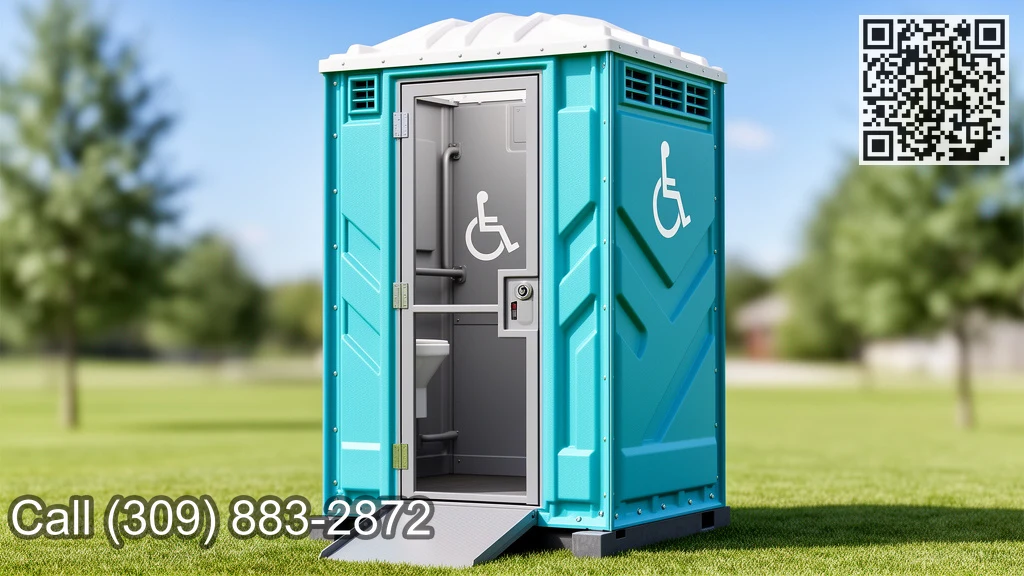
One of the most common mistakes in ada mobile toilet rental planning is dealing with the system itself as the entire task. It is not. Easily accessible portable bathroom units need to have an easily accessible path and entrance, and any ramps or touchdowns that are needed have to comply with the ADA technical requirements.
That sounds obvious until you stroll a real site.
A system can be supplied properly and still end up being unusable if it is put in deep crushed rock, behind a lip in the ground, on unequal surface, or on top of an improvised plywood course that does not satisfy access requirements. Even a properly made ada certified portable commode can fall short in practice if the course to it is not available. From the individual's perspective, a certified interior does not aid if the entryway can not be reached or used.
This is where occasion planning and toilet rental demand to speak to each various other very early. The toilet supplier may supply an ada certified portable toilet system, however the site coordinator often regulates placement. If the organizer selects a verdant slope because it is out of the means, the ease of access problem is not solved by saying the best system was supplied. The ADA looks at accessibility, not simply inventory.
The very same concern develops short-term ramps and touchdowns. If the terrain or setup requires them, they must follow ADA technical requirements. That is an additional point where individuals obtain informal. A makeshift transition that seems manageable to an able bodied volunteer may be unusable or dangerous for somebody using a wheelchair or various other wheelchair aid. Great intentions are not an alternative to compliance.
Identification matters too
Accessible mobile toilet devices should be identified with the International Icon of Availability. This demand is easy to neglect since it really feels second compared with course gain access to or interior clearances, but it offers an actual purpose.
At a congested event, people should not have to guess which device is the obtainable one. Clear identification saves time, lowers confusion, and assists stay clear of the awkward scenario where a person needs to ask personnel or scan a long row of devices to find the appropriate toilet. Signage additionally helps assistance website personnel, that may not recognize the format well enough to route participants quickly.
From a compliance perspective, recognition becomes part of the package. An obtainable device is not completely set up as it should be if it is hidden in ordinary sight without any proper classification. In sensible terms, the International Sign of Availability ought to not be treated as an attractive add on. It is a needed marker of usability.
What the system itself needs to accommodate
The inside of the mobile bathroom matters a lot. Under the ADA structure explained by the Accessibility Board, portable accessible units must satisfy commode room technical requirements, including fixture clearances, turning room, and door handling clearances, plus the appropriate grab bar and water storage room clearance rules.
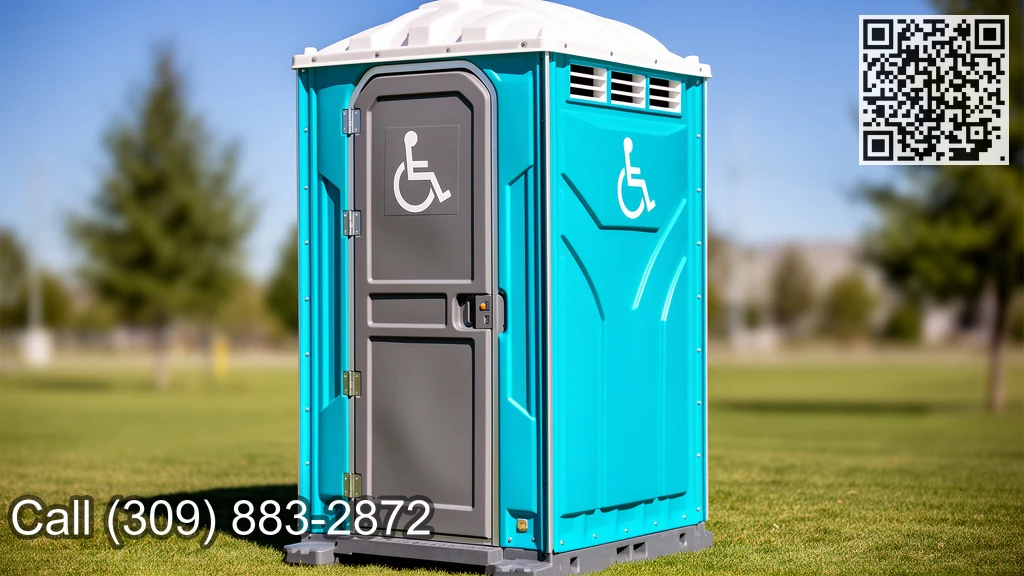
This is where individuals frequently want a basic feature checklist. Actual compliance is much more integrated than that. The inquiry is not only whether grab bars exist, or whether the system looks roomy. The concern is whether the format, clearances, and maneuvering areas please the technical demands that apply.
Turning area matters since a user may require to turn within the unit instead of back out in a tough setting. Door steering clearances issue due to the fact that getting through a door and safeguarding personal privacy are part of making use of the bathroom with self-reliance and dignity. Component clearances matter due to the fact that distance and placing affect whether the commode can be come close to and used. Get hold of bars matter due to the fact that they sustain transfer and stability. Water closet clearance rules matter due to the fact that inches and positioning can change whether a toilet is functionally accessible or merely marketed that way.
What is noteworthy right here is what we must not do, namely improvise numbers or rely upon rumor. The validated context verifies that these technological classifications use, yet it does not provide the exact dimensions. That suggests any type of buyer, tenant, venue operator, or event organizer who needs to verify a particular design ought to seek to the real ADA technological standards and the maker's certified requirements rather than count on a spoken assurance. "It's the larger one" is not a conformity analysis.
Temporary occasions still have to take this seriously
There is a stubborn false impression that accessibility requirements https://zandermuuh267.meridiannest.com/posts/ada-compliant-portable-restrooms-and-the-role-of-entry-clearances loosen up when an event is brief term. The reverse is closer to the fact. Temporary events usually develop the problems where availability gets failed to remember, due to the fact that setup is rushed, the site is improvised, and numerous vendors are coordinating at the same time. That is specifically why the requirement that at least 5 percent of systems in each cluster be accessible at momentary events is entitled to a lot attention.
An exterior wedding celebration venue, a community market, a city sponsored summer performance, or a weekend athletic event may operate for just a day or more, however the people attending still require equal accessibility to bathrooms. An individual who makes use of a wheelchair does not experience exclusion as much less severe due to the fact that the event only lasts a few hours. Actually, brief events can develop more pressure because there is less time to resolve an issue once visitors arrive.
A thoughtful rental strategy generally begins with three inquiries. The number of collections will exist on site? Where can an available course genuinely be kept? Has any person confirmed the actual accessible entry and indoor features of the unit being delivered? Those concerns are mundane, however they protect against the sort of scramble that leaves organizers moving units on event early morning, or even worse, asking forgiveness to guests after the fact.
The building and construction site exception that individuals misread
There is an essential difference in the ADA criteria entailing mobile commode devices at construction websites utilized solely by building employees. The confirmed context notes that these are treated in different ways under the pointed out 1991 standard and are excluded from the mobile bathroom ease of access scoping need defined there. For general mobile bathroom leasings, nonetheless, the accessible unit requirement remains.
This is a narrow factor, however it creates a great deal of confusion due to the fact that it gets repeated also broadly. Somebody hears that construction site mobile commodes are excluded, after that assumes all mobile toilets on all job related sites are exempt. That is not a secure presumption. The exception defined in the confirmed context is particularly connected to building and construction site devices used solely by building workers, and it does not erase the accessibility rules for basic mobile bathroom rentals.
That implies blended use settings should have special treatment. If a website includes members of the public, site visitors, clients, or others outside that exclusive building workers context, the more comprehensive accessible system requirements for mobile restroom rentals continue to be very relevant. Words "building site" alone do not resolve the matter.
When individuals ask whether an ada certified mobile commode is required on a site with energetic construction, the actual solution usually turns on who is making use of the toilet systems and in what context. That is a timeless example of why tags are less useful than facts.
Renting the right unit is only half the job
An ada portable toilet rental choice typically starts with accessibility, yet it should finish with placement and verification. I have seen numerous organizations handle the very first component and disregard the second. They schedule an ada handicap available mobile bathroom well beforehand, feel happy that package is checked, and afterwards on distribution day position it where the vehicle can dump most easily instead of where users can access it reliably.
The far better technique is to deal with availability as a website condition, not simply a product choice. If the unit gets here and the entry deals with a sloppy slope, or the course to it crosses loosened rock, or nearby obstacles tighten the technique, the service might please a getting summary without delivering functional access.
This is also why communication in between venue, coordinator, and vendor matters. A supplier might recognize the functions of its ada compliant portable toilets. The coordinator knows web traffic patterns, visitor flow, and surface. The place may control where units can rest. Availability breaks down when each party presumes somebody else managed the useful details.
A beneficial planning behavior is to stroll the route psychologically before the vehicle ever before shows up. Picture a person coming close to from parking or the main event location, finding the device, getting to the entry, unlocking, navigating inside, and leaving securely. If any type of step in that sequence seems unpredictable, it deserves focus before the event opens.
Terms people use, and what they should truly mean
The market uses a number of overlapping phrases, consisting of ada certified portable commode, ada certified mobile toilets, ada-compliant portable commode, ada-compliant mobile restrooms, and ada accessible portable toilet. Those phrases prevail, but they are not compatible if they are being utilized carelessly.
An ada portable washroom should imply greater than "larger than standard." An ada compliant obtainable portable restroom should indicate the device and its implementation straighten with the applicable ADA requirements. Yet in daily sales discussions, shorthand usually changes precision. A customer requests "the handicap system." A dispatcher notes the order as "ADA." Nobody goes over course access, signs, or cluster counts.
That void between terminology and execution is where disagreements and disappointment begin. The language issues due to the fact that it forms assumptions. If a public event advertises available holiday accommodations, the bathroom setup ought to be evaluated with the seriousness that assure deserves.
For that factor, I motivate individuals to ask direct functional concerns instead of depending on product labels alone. Ask whether the device is planned to fulfill the ADA toilet space technical needs. Ask just how the International Sign of Access will appear. Ask where the system should be put to maintain an obtainable course and entrance. Ask just how the cluster count impacts the variety of easily accessible units needed. Those inquiries are far more valuable than an obscure assurance that the larger trailer or mobile toilet is "ADA ready."
Where conformity stress is heading
Accessibility enforcement does not take place in isolation. One recent indication of the broader compliance environment is the Division of Justice guidance issued in April 2026 expanding the target date for sure state and city government web and mobile access regulations to April 26, 2027 for bigger entities. On its face, that advice worries electronic accessibility, not portable washrooms. But it shows something crucial about the bigger ADA landscape: ease of access expectations are active, recurring, and not fading into the background.
That wider context should matter to public companies, institutions, districts, and occasion operators. If an organization is taking notice of ADA responsibilities on-line, it must bring that exact same technique to physical gain access to at short-term occasions and public celebrations. The groups are different, however the compliance mindset need to be consistent.
In genuine terms, that suggests less assumptions and far better documents. It implies validating what standards apply prior to the rental order is wrapped up. It means recognizing that a short-lived event can still offer a major access concern. It indicates avoiding the old practice of treating available toilet planning as a courtesy item as opposed to a core functional requirement.
A functional method to think of compliance before shipment day
The most reliable bathroom plans often tend to be the least significant. They do not rely upon last minute improvisation. They take care of accessibility early, when there is still time to adjust unit matters and placement.
If you are in charge of a mobile toilet order, keep your preparation anchored to a few basics:
- Start with the 2010 ADA Requirements for Accessible Layout as the regulating government framework.
- For each collection of mobile solitary individual toilet units, make up at least 5 percent available units, including at short-term events.
- Confirm that available systems will certainly be related to the International Symbol of Accessibility.
- Verify that the path, entry, and any kind of required ramps or landings will abide by ADA requirements.
- Make sure the device itself is planned to satisfy the appropriate commode area technological requirements.
That is not a substitute for lawful or style evaluation where one is needed, but it is an audio field guide. A lot of accessibility failures in mobile bathroom rentals do not come from one rare formality. They originate from missing among those standard points.
Why this matters past conformity language
An available bathroom is very easy to discuss in abstract terms and difficult to appreciate totally until you envision the alternative. For many individuals, restroom access forms whether they can participate in an occasion easily in any way. If the only functional toilet is absent, obstructed, or incorrectly set up, the message sent out is immediate: this occasion was not planned with you in mind.
That is why an understanding method matters as long as the lawful one. The ADA standards create the framework, but the genuine objective is practical, dignified use. Individuals should have the ability to find the restroom, reach it, enter it, maneuver inside, and utilize it without unnecessary dependancy or embarrassment.
When organizers obtain this right, nobody makes a speech concerning it. The day simply goes better. Guests relocate through the event without friction. Team invest less time resolving preventable troubles. The available system is not an afterthought off in a hard edge. It is part of the site plan from the start, as average and as necessary as lights or parking.
That is the right standard to aim for. Not just renting an ada portable commode, however making certain the accessibility requirements that use are in fact met where it counts, on the ground, at the door, and inside the unit.
 Ask ChatGPT
 Ask Grok
 Ask Perplexity
 Ask Claude
 Ask Google AI
 Ask You